
Threat Landscape
What Keeps Network Teams Up at Night?
What keeps network teams up at night?
As DDoS attacks evolve from simple volumetric floods to AI-driven botnet swarms, traditional perimeter defenses are hitting their limits.
Ask yourself these 4 questions:
- Latency & Saturation: Will your links saturate and customers lose service before your scrubbing solution kicks in?
- Carpet Bombing: What if thousands of IPs are under attack, but none crosses your detection thresholds?
- Outbound Threats: Could infected subscriber devices turn your network into an attack platform and get your IP ranges blacklisted?
- Internal Spreading: If an attack spreads inside your network without crossing the perimeter, will you spot it before your customers do?
Swipe through the carousel below to explore the 5 next-gen threats keeping VPs of Network & Security up at night and how to stop them directly on your routers in under 30 seconds.
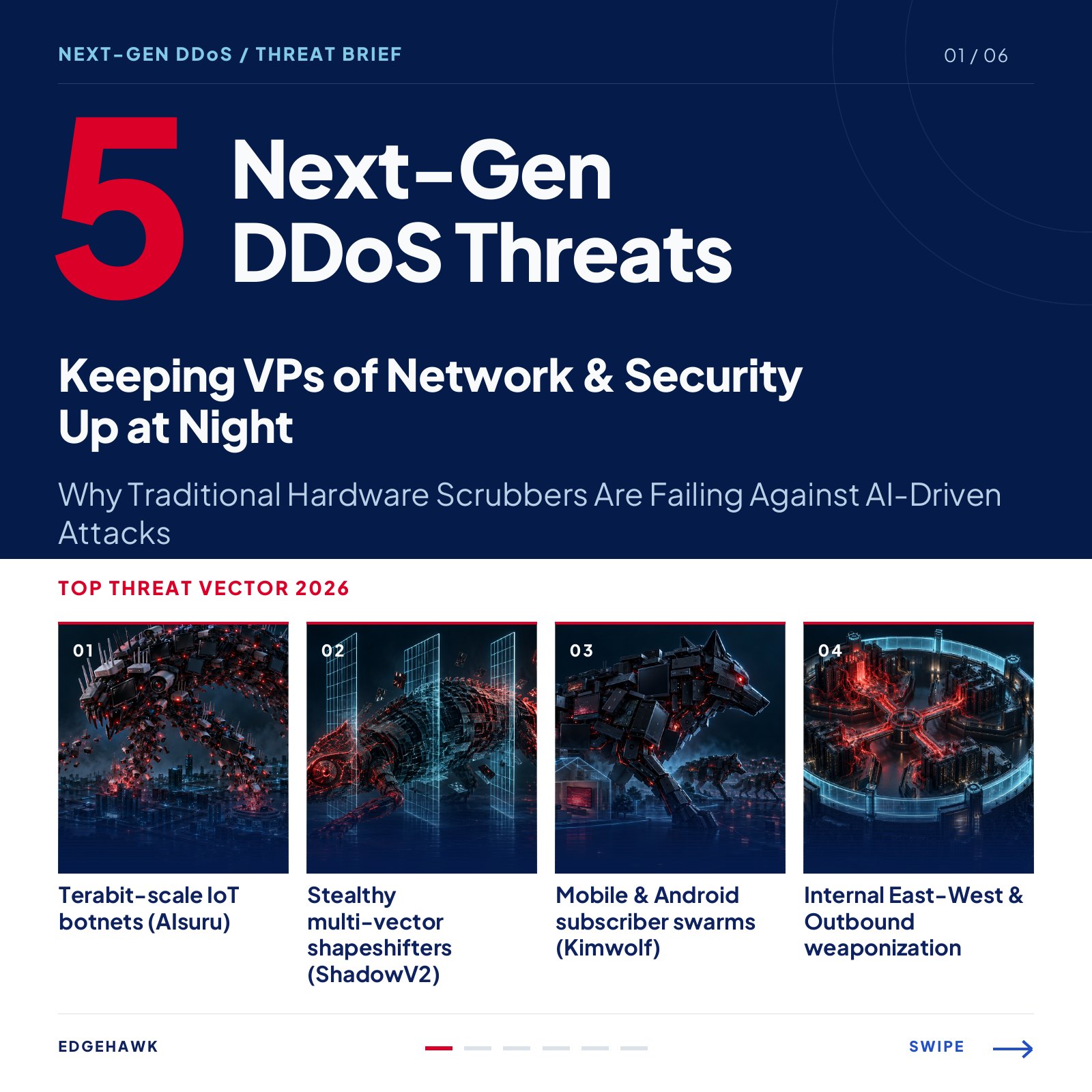

Next-Gen DDoS Threats Keeping VPs of Network & Security Up at Night — Why traditional hardware scrubbers are failing against AI-driven attacks. Top threat vectors 2026: 01 Terabit-scale IoT botnets (AIsuru); 02 Stealthy multi-vector shapeshifters (ShadowV2); 03 Mobile & Android subscriber swarms (Kimwolf); 04 Internal East-West & outbound weaponization.
Text of all slides
- Next-Gen DDoS Threats Keeping VPs of Network & Security Up at Night — Why traditional hardware scrubbers are failing against AI-driven attacks. Top threat vectors 2026: 01 Terabit-scale IoT botnets (AIsuru); 02 Stealthy multi-vector shapeshifters (ShadowV2); 03 Mobile & Android subscriber swarms (Kimwolf); 04 Internal East-West & outbound weaponization.
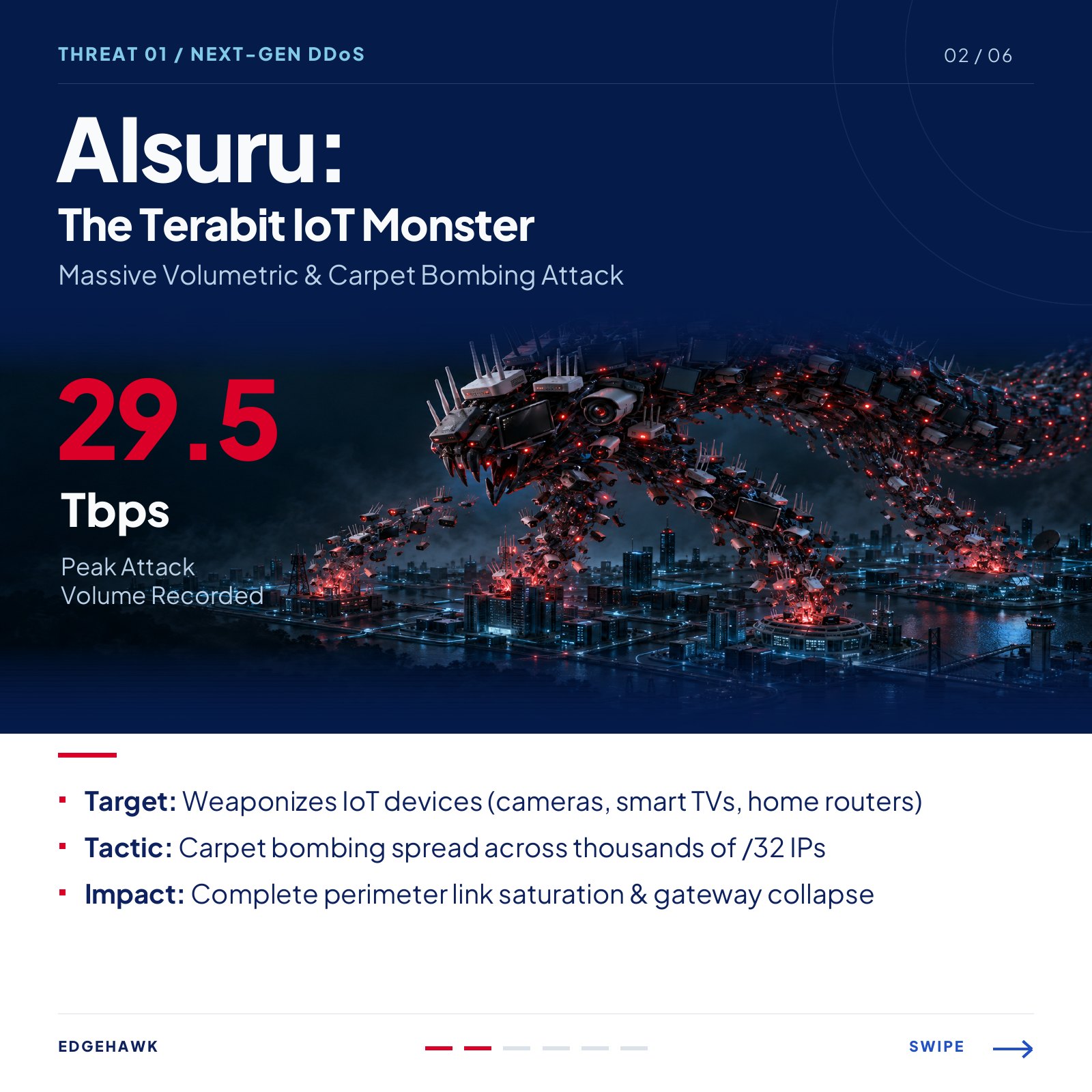
- Threat 01 — AIsuru: The Terabit IoT Monster. Massive volumetric & carpet bombing attack; 29.5 Tbps peak attack volume recorded. Target: weaponizes IoT devices (cameras, smart TVs, home routers). Tactic: carpet bombing spread across thousands of /32 IPs. Impact: complete perimeter link saturation & gateway collapse.
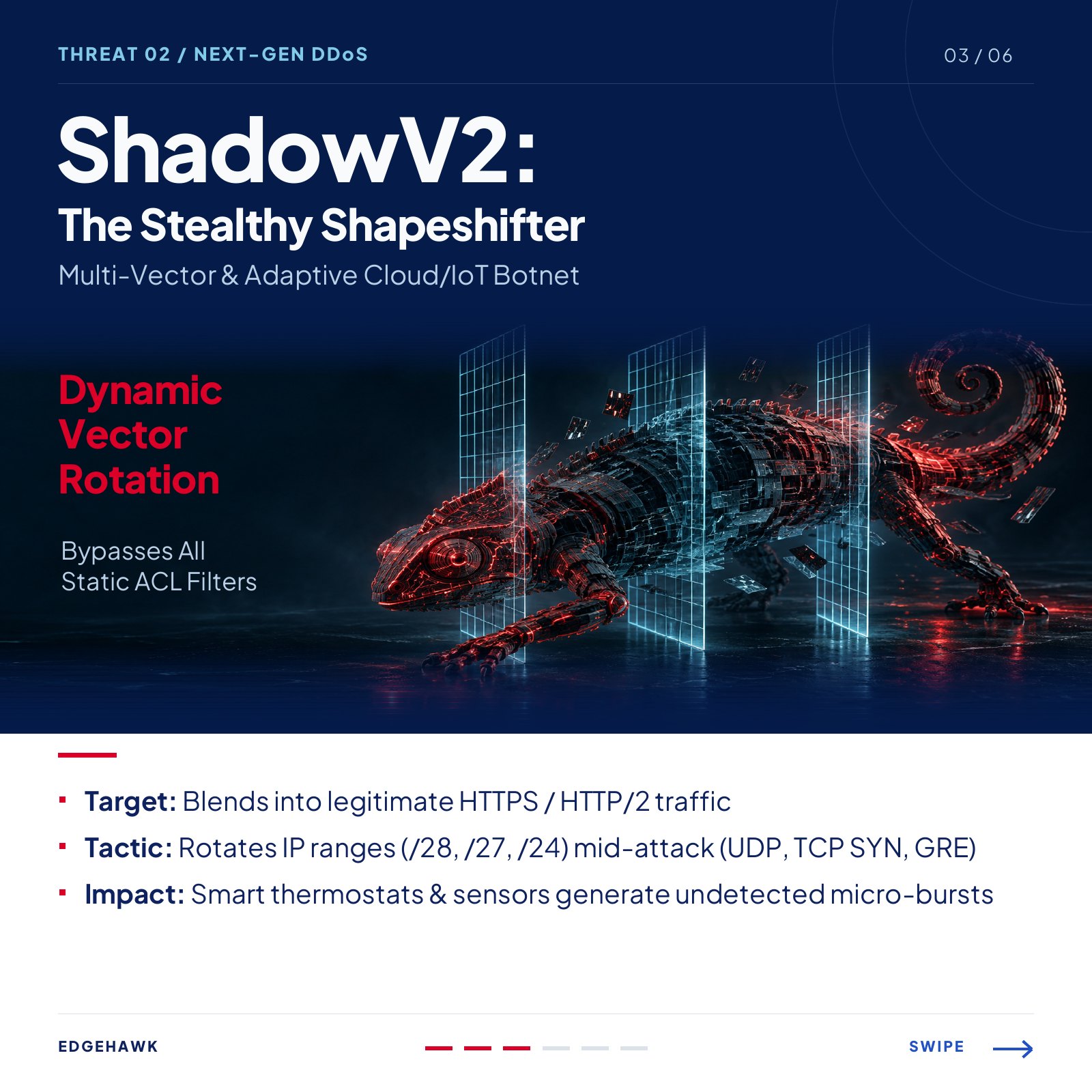
- Threat 02 — ShadowV2: The Stealthy Shapeshifter. Multi-vector & adaptive cloud/IoT botnet; dynamic vector rotation bypasses all static ACL filters. Target: blends into legitimate HTTPS / HTTP/2 traffic. Tactic: rotates IP ranges (/28, /27, /24) mid-attack (UDP, TCP SYN, GRE). Impact: smart thermostats & sensors generate undetected micro-bursts.
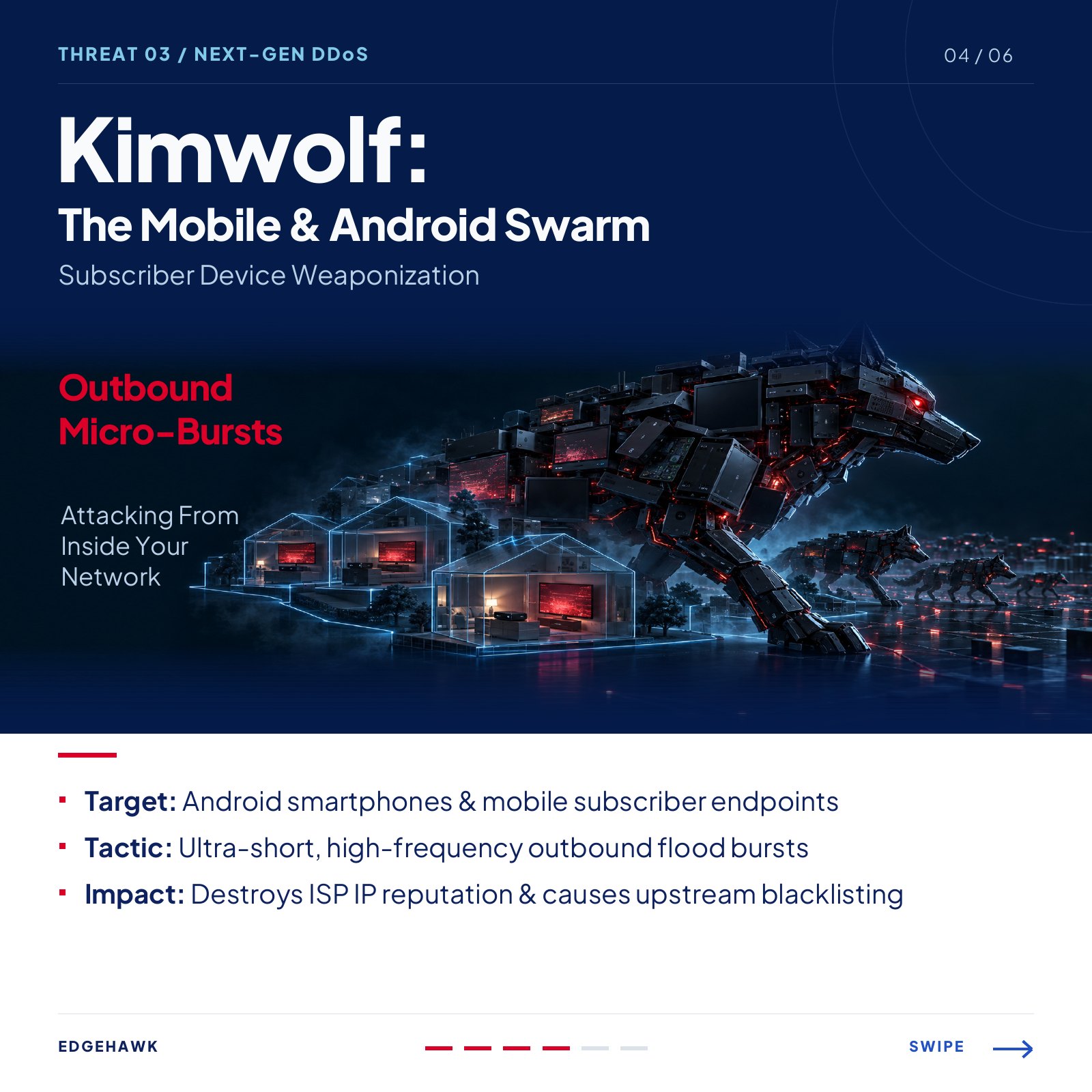
- Threat 03 — Kimwolf: The Mobile & Android Swarm. Subscriber device weaponization; outbound micro-bursts attacking from inside your network. Target: Android smartphones & mobile subscriber endpoints. Tactic: ultra-short, high-frequency outbound flood bursts. Impact: destroys ISP IP reputation & causes upstream blacklisting.
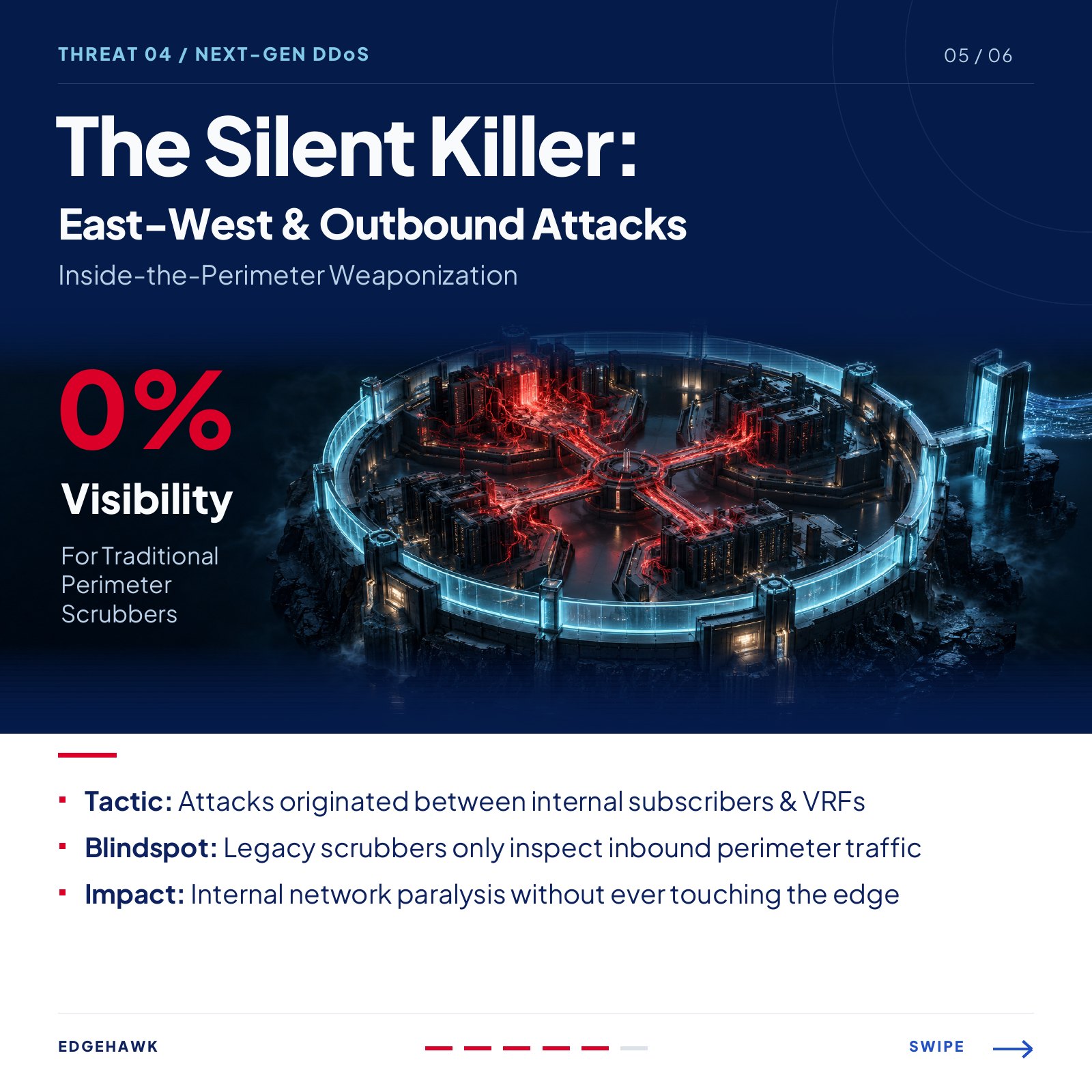
- Threat 04 — The Silent Killer: East-West & Outbound Attacks. Inside-the-perimeter weaponization; 0% visibility for traditional perimeter scrubbers. Tactic: attacks originated between internal subscribers & VRFs. Blindspot: legacy scrubbers only inspect inbound perimeter traffic. Impact: internal network paralysis without ever touching the edge.
- The Solution — Sleep Peacefully: Stop Them On-Box in <30 Seconds with Cisco Secure DDoS Edge Protection (EP). 100% software: Docker container native on Cisco IOS-XR routers. Unsupervised ML: instant behavioral baseline without static rules. 360° defense: stops inbound, outbound & East-West attacks. 60% TCO savings: offloads 95% volumetric load from expensive scrubbers.